
Active Therapy — Mind and Body Development

Active Therapy is a practical mind and body development programme that helps people with disabilities reach higher levels of achievement. Rather than simply accepting limitations, we focus on finding solutions. Our approach pushes beyond “accept and adapt,” helping each person discover what they truly can do.
Who We Work With
Active Therapy supports people with a wide range of needs, including:
- Poor body awareness
- Low muscle tone
- Low achievement levels
- Emotional or behavioural difficulties
- Dyspraxia
- Dyslexia
- Cerebral palsy
- ADHD
- Learning disabilities
- Autism spectrum disorder
- Stroke victims
This list is far from complete — there are many other conditions where Active Therapy can make a real and lasting difference.
Involving the Whole Family
What makes Active Therapy unique is that it involves everyone around the individual — parents, siblings, teachers, and professionals such as physiotherapists, occupational therapists, and social workers. Everyone is welcome to observe, participate, or consult during sessions. This teamwork ensures that what we do complements every part of the person’s development.
Our Philosophy
We believe everyone has hidden potential. Too often, that potential is overlooked or limited by labels and expectations. Active Therapy looks beyond those limits.
Our programme is based on practical achievement — breaking down each skill into small, achievable steps so that every person can experience success. At Active Therapy, everyone can succeed.
The Research into Active therapy
Between 1994 and 1998 Active therapy was researched at Liverpool John Moore’s University, by Dr. Moira Lafferty, using it’s origin of gymnastics as its base then diversifying into Behaviour Modification and Gross Motor Movement development. The research covered numerous modules including motor skills (below) which proved how those skills, using the intervention strategy of Active therapy, were significantly improved.
This chart (right) was one of many produced during this research to analyse the changes in movement due to intervention. It compares the ankle movement pattern of a child without a disability (BLUE) to a child with Down’s syndrome (RED) followed by the pattern of the same child (GREEN) after 12 weeks of Active therapy.
Enhancing Movement Patterns through Active therapy
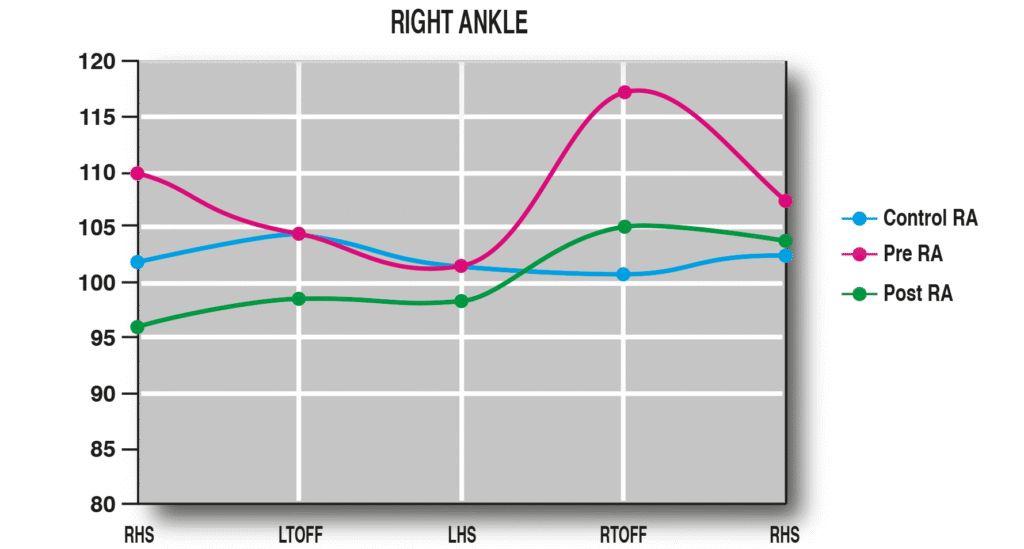
The Conclusions of this Module were:
The gait pattern of children with Down’s syndrome can be enhanced through Active therapy. Enhancing the gait pattern results in a more efficient stride pattern and reduces the stress placed on individual joints.
Children with Down’s syndrome have the ability to learn, adapt and remember new movement patterns. Improvement of the fundamental patterns through intervention will allow the development of a larger skills repertoire. This will facilitate the child’s ability to interact with the environment and subsequently enhance their quality of life.
Active Therapy and Behaviour Modification
Active therapy begins with Self Control.
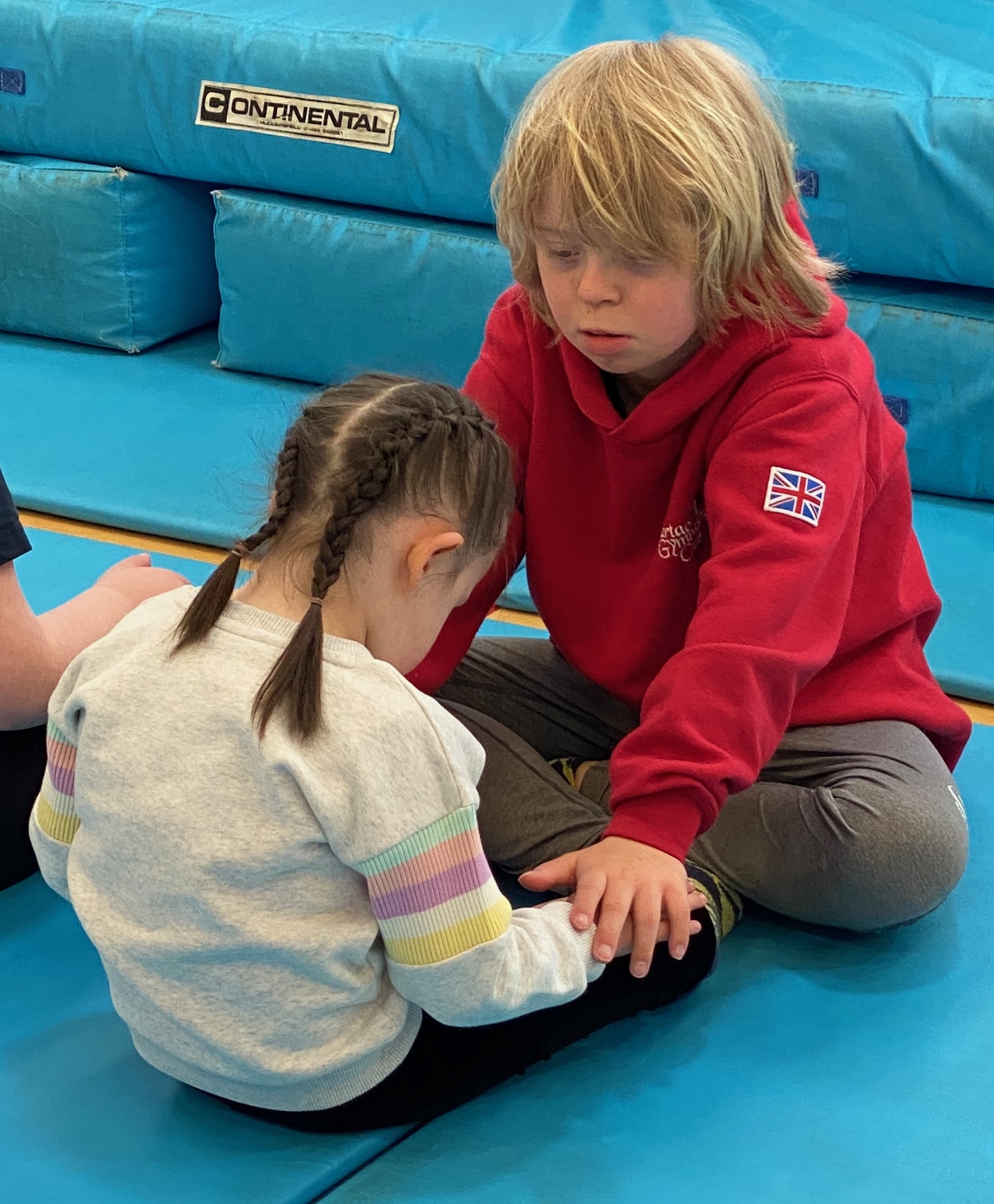
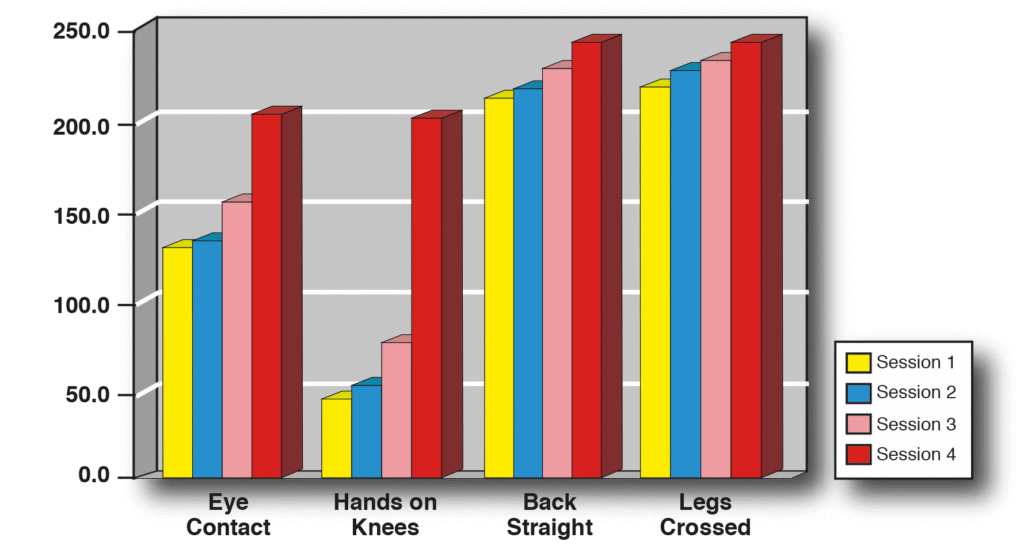
Another module of research looked at teaching self control by introducing stillness to a group of children who could not be still. Clearly the implications of not being able to sit still have a major impact on the capacity of any child to learn. Active therapy helps to develop this ‘self discipline’ and as the charts below indicate, with outstanding results. The children were measured over a period of twelve months on how well they sat on the floor with their legs crossed and their hands on knees.
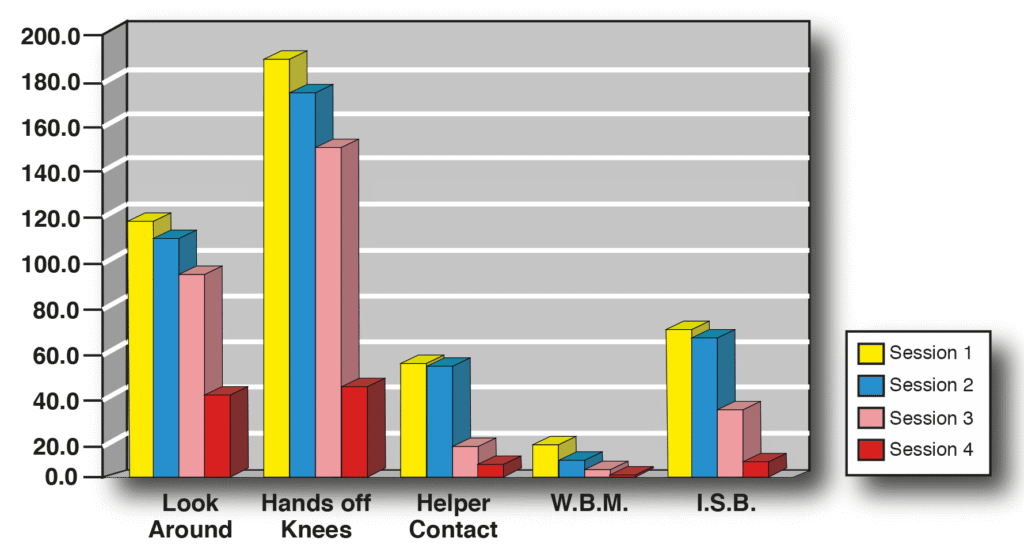
W.B.M. = whole body movement – I.S.B. = Inappropriate social behaviour
The chart above shows the increase of positive behaviour over a twelve month period.